

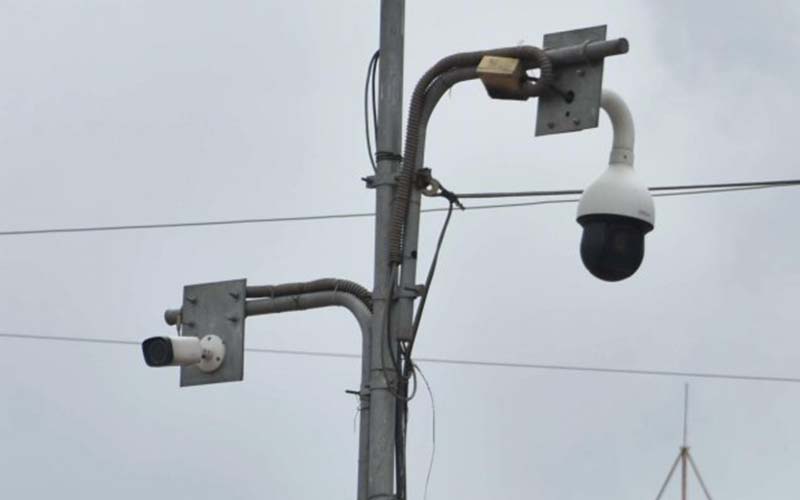
PUNE: The traffic police have joined hands with the Pune Smart City Development Corporation Limited (PSCDCL) to install automated challan generation systems on select closed circuit television (CCTV) cameras for better detection of road rule violations.
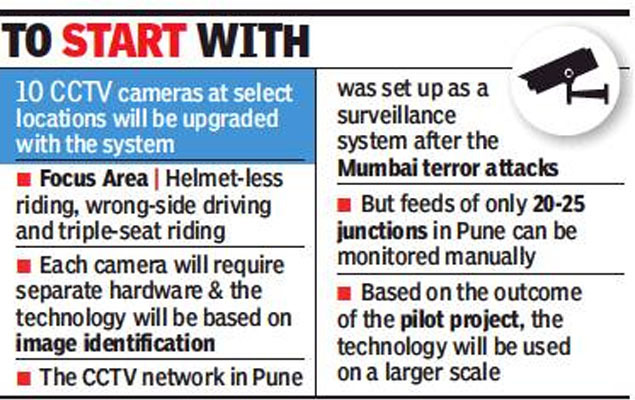
Altogether 10 CCTV cameras at some identified locations will be upgraded with the system as a pilot project and are likely to come into use by the middle of March.
In the initial phase of the automation project, the Pune traffic police are set to focus on three violations — helmet-less riding, wrong-side driving and triple-seat riding — using the automated challan generation system.
“The PSCDCL has agreed to support and fund the project. The proof of concept (POC) will be tested by the PSCDCL with 10 cameras. Once it is successful, more cameras will be upgraded. They have accepted to bear the expenditure for the POC and the subsequent roll-out of the project,” deputy commissioner of police (traffic) Tejaswi Satpute said.
Satpute said, “Manual intervention will not be required. The challans will be independently and automatically generated once the CCTV cameras capture the traffic violations.”
Each camera will require separate hardware, Satpute said, adding that the technology would be based on image identification. “An algorithm will be designed in a way that the system can identify numbers written in different fonts. This is a pilot project. We will make improvements based on the shortcomings revealed in the pilot project before rolling it out on a bigger scale,” the officer said.
PSCDCL chief executive officer Rajendra Jagtap said the project was aimed at deriving maximum benefits of the existing infrastructure. “The CCTV network in Pune was set up as a surveillance system after the Mumbai terror attacks for safety and security purpose. The police modified the system later, enabling them to manually look at numbers of vehicles violating rules and issue challans,” he said.
“However, feeds of only 20-25 junctions can be monitored manually. World over, new analytical platforms have come up on the edge (camera) and on the feed to pick up numbers of vehicles and generate challans,” he added.
Jagtap said based on the outcome of the pilot run with 10 cameras, deployment of the technology will be done on a larger scale.
On December 23, 2018, the Regional Transport Office (RTO) had stated that it was the responsibility of the manufacturers to ensure that vehicles purchased from April 1 this year are fitted with high security number plates. The officials had said the RTO would have to develop a strategy if such number plates were to be made mandatory for the existing vehicles.
High security number plates are made of aluminium and wrapped in reflective tape with chrome-based and hot-stamped selfdestructive holograms and retro-reflective film.
Source : https://timesofindia.indiatimes.com/city/pune/cctv-cameras-to-auto-generate-challans-by-mid-march/articleshow/67631682.cms