

By
Dr.Tumpa Mukherjee , Assistant Professor in Sociology
Women’s Christian College, Kolkata
COVID 19 has brought unprecedented challenges to the entire human civilization. In late modernity one of the key activities of the police as an institution is the management of such unforeseen risk and it’s after effect.
Micro Community Policing Units
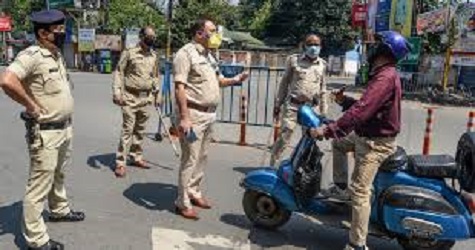
After the nationwide lockdown issued by the Indian government, a zero tolerance policy to deal with those who defy the lockdown and loiter around meaninglessly have been adopted, thereby the gamut of police work has increased. The police are responsible to ensure compliance of lockdown through minimum use of force, thereby respecting human rights of the citizens. At this hour of crisis, police personnel need to be thoroughly professional blended with compassion and empathy. A non-discriminatory service delivery approach towards its clientele –the ordinary citizens of the country, is required. While the police top brass is responsible for drafting lockdown containment plans, the middle and lower level officers along with civic volunteers are the foot soldiers in this endeavor to control such a gigantic health epidemic. Community Policing has been redesigned in form of locating extreme micro units labeled as ‘hotspots’ and the police forces are involved in cordoning-off the areas, and sealing off such hotspot thoroughfares, streets, lanes and by lanes. The containment zones are being barricaded thereby preventing people from moving in and out of these areas. They are involved in setting up aisles in local markets; engaged in covid patrolling the beats on motorbikes; adopting innovative means such as using the music of popular songs by inserting lyrics to disseminate information on preventive measures to be adopted by the civil society, in the process entertaining them also. Thus the police are trying to look after the mental health of citizens confined in their homes, in this lockdown The police are involved in conducting thermal check up, restricting non essential movements, distributing masks and other essential services such as food packets or medicines with the help of non-governmental organizations in the containment zone.
Minimum Use of Force
The videos circulated in social media reports stray incidents of highhandedness by the police force in controlling people affected by corona virus such as use of lathi while dispersing the migrant workers in northern and western India, and forcing migrant workers to do push-ups on roads and pavements. It is to be remembered that in this lockdown the migrant /daily wage workers are the worst sufferers. Battling hunger, poverty, uncertainty for many days, they are desperate to return to work for their livelihood. It is to be remembered that migrant/ daily wage workers are not criminals, but they are unfortunate victims of circumstances. Fear and anxiety about an uncertain immediate future mars their life. It is necessary for police personnel to learn to deal with such vulnerable mob/crowd by following non-violent methods. Minimum use of force is required to be followed while dealing with such disarrayed mobs. The greatest challenge for police personnel is to control such crowd by maintaining physical distance. Hence instead of following the ‘hard’ way by using the baton, various ‘soft’ means such as using public announcement systems requesting dispersal of crowd is more appealing to such a segment of population. Loudspeakers and mikes should be used by police personnel for making announcements in residential colonies and slums.
Marginalized Population and Police
The next vulnerable section of the society is the elderly population. For such elderly population police personnel with the help of civic volunteers and health workers are to supply essentials at the doorsteps and sick people in high risk zones. In West Bengal, police from Bidhannagar Commissionerate are engaged in operating vehicles round the clock to help old aged persons, persons with disability or in distress, free of cost to their destination and back in the name of “Sahayak-Jan”. The most important duty of the police offers is containment and helping redistribution of resources in this pandemic phase. It is necessary for police to ensure that essential services are delivered to the marginalized section of the population such as sex workers, LGBT community, physically and mentally challenged citizens. In the media it has already been reported that during lockdown domestic violence have spurred. Women Police Stations can play a positive role in such occasion. Along with non-governmental organizations women police personnel can engage in legal and psychological counseling of the victims through help lines. Based on the ethos of understanding and empathy women police officers can generate positive emotions and try to fix ‘the problem’ in such precarious situation.
Minority Community and the Police
This is a very crucial phase in the enforcement of lockdown since the Muslim community throughout the country will be celebrating Ramzaan. The police personnel can take the help of their religious and community leaders, disseminate information on precautionary measures to be adopted while following religious rituals. Police officers can seek suggestions from religious and community leaders through video conferencing on how to respond to the special needs and problems of Muslim community during this festive season and respond swiftly according to the needs of the community. Police along with the help of civic volunteers and non-governmental organizations should make arrangements so that the daily essentials required in this festive season are available to the Muslim community. This will help to build trust among the Muslim community and the police.
Enforcing Law in the Quarantine Units
The police have been responsible along with health officials in setting and monitoring the quarantine units. There have been reports of people trying to escape from such quarantine units. It is necessary to deploy police personnel in such crucial spots and monitor the activities of people undergoing social isolation in such units. Police personnel have started using closed circuit television and drones for aerial surveillance of congested sensitive areas, for locating and identifying those who violate lockdown. It is necessary that intelligence branch (both central and state) collect and collate information on any kind of socio-religious–political gathering. Such flow of information can help the police to plan strategies and implement them by halting gathering before its occurrence.
Change in Laws
The colonial, archaic Epidemic Diseases Act, 1897, and the National Disaster Management Act, 2005, needs to be reframed to meet the challenges of the twenty-first century. It is necessary that police receive training on legal enforcement of the National Disaster Management Act, 2005. The National Disaster Response Force and Civil Defense of the Government of India may have a Pandemic Crisis Management Unit which will maintain horizontal collaboration with other stake holders, civil in nature, to confront such a situation in near future.
Intra–communication changes
It is necessary that the police in India establish horizontal communication across rank and file. Since beat police officers are in the front line, their opinion should be taken into account while drafting local lockdown plans and strategies. Senior officers should have updated information on the spread of the disease as well as lockdown violations from the ground zero. Plans and actions taken should be reviewed ever week and should be tailored to meet the specific needs of the beat area. On-the-job briefings for police personnel in such a lockdown situation are also essential and needs an ‘innovative’, ‘flexible’ professional effective leadership at the top. There should be a monitoring unit for on-ground implementation of the orders
Safety Measures for the Police
In this global war against the invisible corona virus police personnel are themselves at risk. They are constantly encountering strangers, guiding and helping them. They are serving the public just by wearing ordinary masks ( at times without gloves ) without even knowing who is the carrier of this disease. They are never provided with personal protection equipment (PPE) kits while on duty in hotspots or containment zones. It is necessary to look after their physical and mental well being also. Police personnel should be compulsorily provided with PPE. They can contact a few facilities management organizations and get police stations, different police units, and police vehicles sanitized regularly.
Future Plans
The police stations in collaboration with non-governmental organizations should set up an ‘information bank’ about the location of grocery; ATM; hospitals and medicine shops; ration shops; health centers and various other essential services and their providers. Police should be swift in action in giving out any such information to civilians, when required. All beat officers should have knowledge of this information bank and inform civil society members while patrolling the beat through the use of public announcement system. Since physical distancing is the new norm, beat police officers can use social media to establish regular contact with residents of local communities, understand their needs, difficulties, redress their grievances and try to fulfill their needs. Social media can be used to disseminate information about lockdown management plans at local level and update the civil society with revised lockdown plan, if any. In few police commissionerates, separate control room has been set up to receive orders from people staying in door. Then police personnel in horizontal collaboration with non-governmental organizations are trying to provide the necessary essentials to the members of the civil society. It is necessary that in future an Emergency Response Unit is developed in both rural and urban areas with the help of police, health workers, information technology sector and various other stake holders. In receiving a call at such an Emergency Response Unit, the police can immediately get involved in helping citizens in need.
It is to be remembered that the police force has never received any training to deal with such global health hazard. In fact the entire world was not prepared for such apocalypse. Keeping in mind that in twenty-first century we, the mortal human beings, live in a state of constant natural and manufactured risk, it is necessary that in future the police training institutes train the probationers on how to deal with such health epidemic and various other environmental hazards. It is necessary that police personnel across rank and file receive training on human physiology and psychology, mental health and counseling. In the Compendium of Good Practices a section should be devoted in documenting the successful police practices in confronting Covid -19, which can be a very useful resource in training police personnel in future. It is necessary that there is allocation of resources in police budget for preparing for such pandemic in near future. The need of the hour is to draft a standard operating procedure to deal with such health hazards which can be tailored to meet the region specific needs. The police officers have a very important role to play as a law enforcement agency, as a social worker, and a psychological counselor in this pandemic. The impact of corona virus will bring a sea change in policing in India, in near future.
About the Author
 Tumpa Mukherjee is working as Assistant Professor in Sociology, Women’s Christian College, Kolkata, India. An alumnus of Presidency College, University of Calcutta and Jadavpur University, she has completed her doctoral studies on ‘Women Police in Community Policing: A Comparative Study of Kolkata Police with West Bengal Police (Districts of North & South 24 Parganas)’.
Her email id is :tumpamukherjee5@gmail.com.